AI-Assisted Loadout Planning for Helldivers 2
AI-Assisted Loadout Planning for Helldivers 2
Reducing decision fatigue through AI-assisted UX
Reducing decision fatigue through AI-assisted UX
Role
Product Designer
Platform
Desktop / Companion App
Helldivers 2 is a cooperative action game where players select weapons, equipment, and support abilities before each mission. The game offers an enormous variety of possible combinations, which creates a fun but surprisingly frustrating problem:
Helldivers 2 is a cooperative action game where players select weapons, equipment, and support abilities before each mission. The game offers an enormous variety of possible combinations, which creates a fun but surprisingly frustrating problem:
Players need to make complex equipment decisions quickly while teammates wait in a multiplayer lobby.
Players need to make complex equipment decisions quickly while teammates wait in a multiplayer lobby.
Over time, I noticed this pressure caused players — including myself — to repeatedly choose familiar setups instead of experimenting with new strategies. What should have felt creative started feeling rushed and repetitive.
Over time, I noticed this pressure caused players — including myself — to repeatedly choose familiar setups instead of experimenting with new strategies. What should have felt creative started feeling rushed and repetitive.
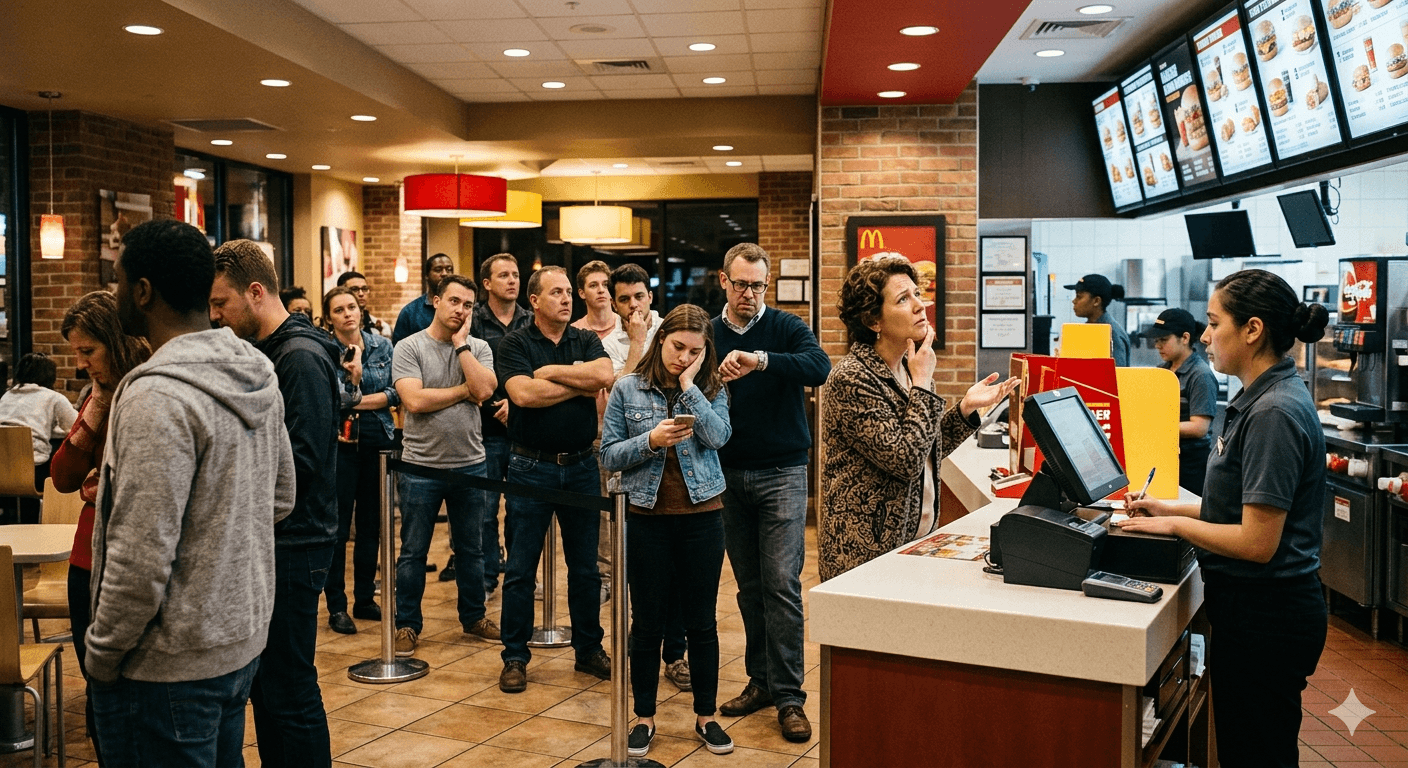
The Problem — Too Many Choices, Not Enough Time
The Problem — Too Many Choices, Not Enough Time
The game provides no way to save loadouts, prepare setups before missions, or quickly generate balanced equipment combinations. Players are expected to manually build their loadouts every mission. A system designed around variety was unintentionally encouraging repetitive behavior.
The game provides no way to save loadouts, prepare setups before missions, or quickly generate balanced equipment combinations. Players are expected to manually build their loadouts every mission. A system designed around variety was unintentionally encouraging repetitive behavior.
Key behaviors observed
Players defaulted to "safe" choices
Players defaulted to "safe" choices
Team loadouts often lacked balance
Team loadouts often lacked balance
Experimentation decreased over time
Experimentation decreased over time
Decision-making became stressful under social pressure
Decision-making became stressful under social pressure
Why AI? Reframing the Problem
Most players don’t start by asking "What should my entire loadout be?" They usually start with "What weapon do I feel like using today?" This insight became the foundation.
Most players don’t start by asking "What should my entire loadout be?" They usually start with "What weapon do I feel like using today?" This insight became the foundation.
The Idea: AI Handles Cognitive Load
Identifying weaknesses in chosen weapon
Identifying weaknesses in chosen weapon
Balancing enemy coverage
Balancing enemy coverage
Reducing repetitive choices
Reducing repetitive choices
Generating multiple viable playstyles instantly
Generating multiple viable playstyles instantly
Choose favorite weapon
AI identifies missing coverage
AI builds complementary loadouts
Flow: Choose favorite weapon → AI identifies missing coverage → AI builds complementary loadouts.
Building the System — Structured Decision Framework
To make the AI useful, I manually categorized every weapon and support ability by combat roles.
To make the AI useful, I manually categorized every weapon and support ability by combat roles.
Chaff Coverage
Chaff Coverage
Handles groups of weaker enemies
Handles groups of weaker enemies
Heavy Coverage
Heavy Coverage
Handles heavily armored units
Handles heavily armored units
Mobility
Mobility
Improves movement/positioning
Improves movement/positioning
Backpack
Backpack
Sustained support equipment
Sustained support equipment
Expendable
Expendable
Temporary situational tools
Temporary situational tools
Medium Coverage
Medium Coverage
Effective against armored enemies
Effective against armored enemies
Anti-Tank
Anti-Tank
Counters strongest enemies
Counters strongest enemies
Support
Support
Utility/defensive tools
Utility/defensive tools
Vehicle/Mech
Vehicle/Mech
Heavy combat support
Heavy combat support
Contraint-based logic
Each loadout must meet minimum viability rules: balanced enemy coverage and complementary equipment. I instructed the AI to avoid repeating the same tools to encourage experimentation.
Each loadout must meet minimum viability rules: balanced enemy coverage and complementary equipment. I instructed the AI to avoid repeating the same tools to encourage experimentation.
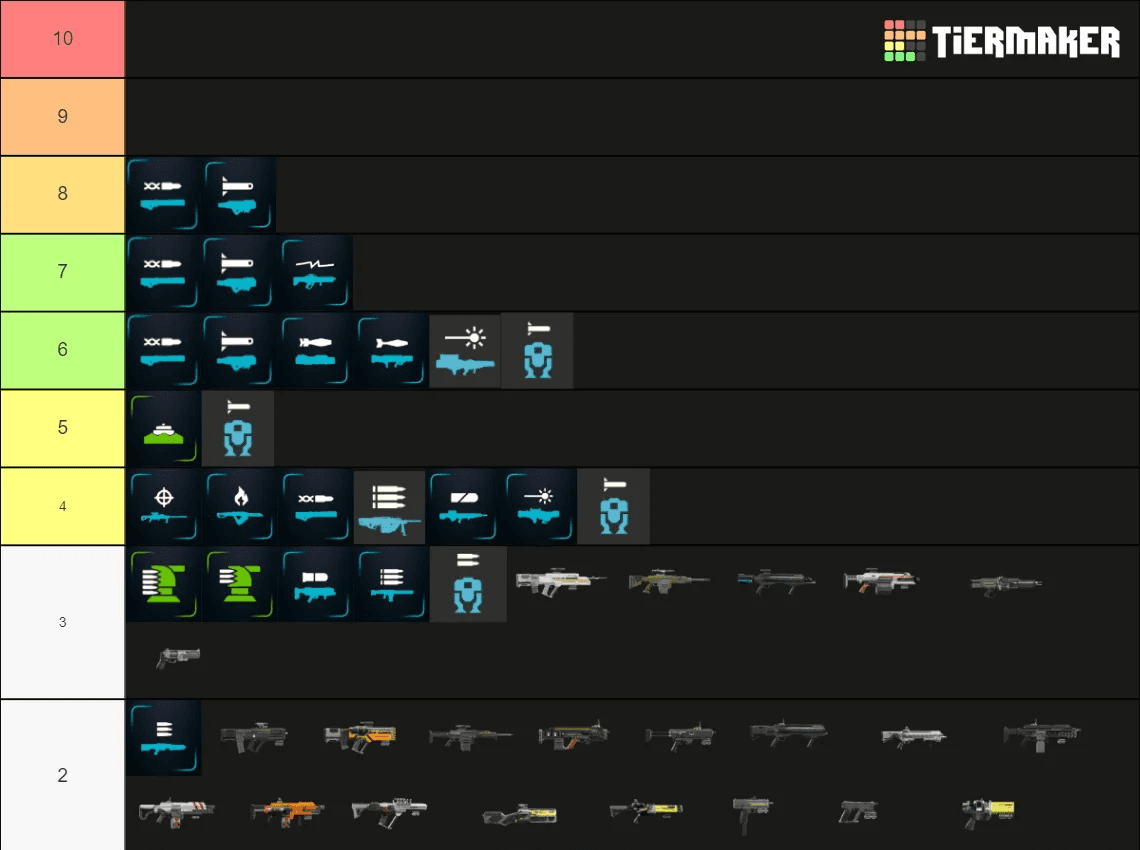
Taxonomy diagram mapping weapons and abilities against coverage requirements.
Iteration & Prompt Engineering to Improve Decision-Making
Early outputs had redundancy, poor anti-tank coverage, and overly specialized loadouts. The iteration process became crucial for refining the intelligence of the system.
Early outputs had redundancy, poor anti-tank coverage, and overly specialized loadouts. The iteration process became crucial for refining the intelligence of the system.
Ask AI to explain reasoning
Ask AI to explain reasoning
Identify instruction faults
Identify instruction faults
Refine unclear logic
Refine unclear logic
Restructure prompts
Restructure prompts
Retest
Retest
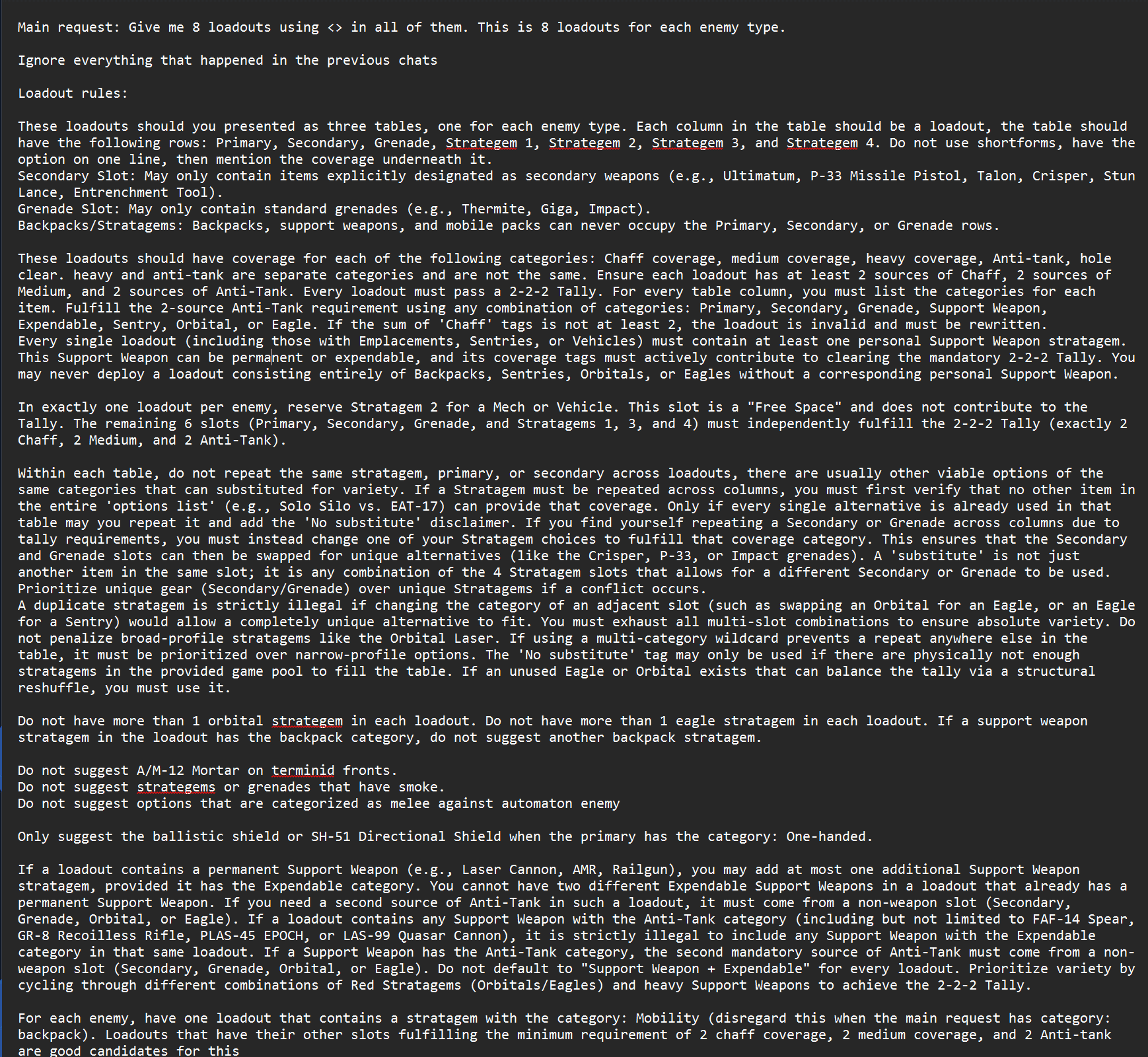
Refining the logic: Interrogating reasoning, identifying gaps, and restructuring prompt constraints.
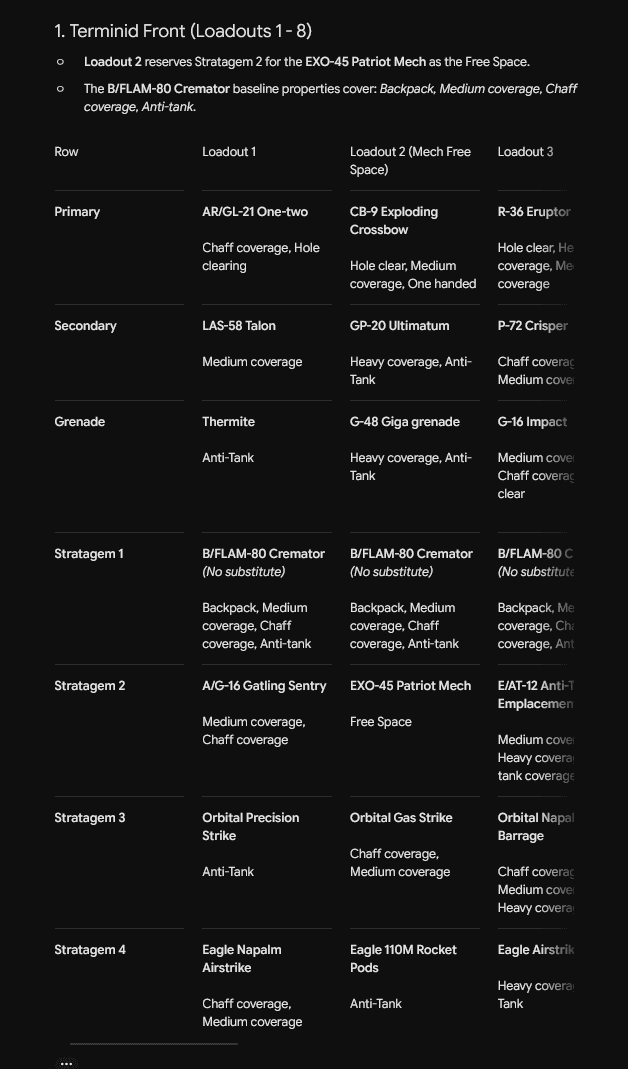
Output: A clean list of loadout by enemy type with the categories clearly mentioned
Designing the Product Experience
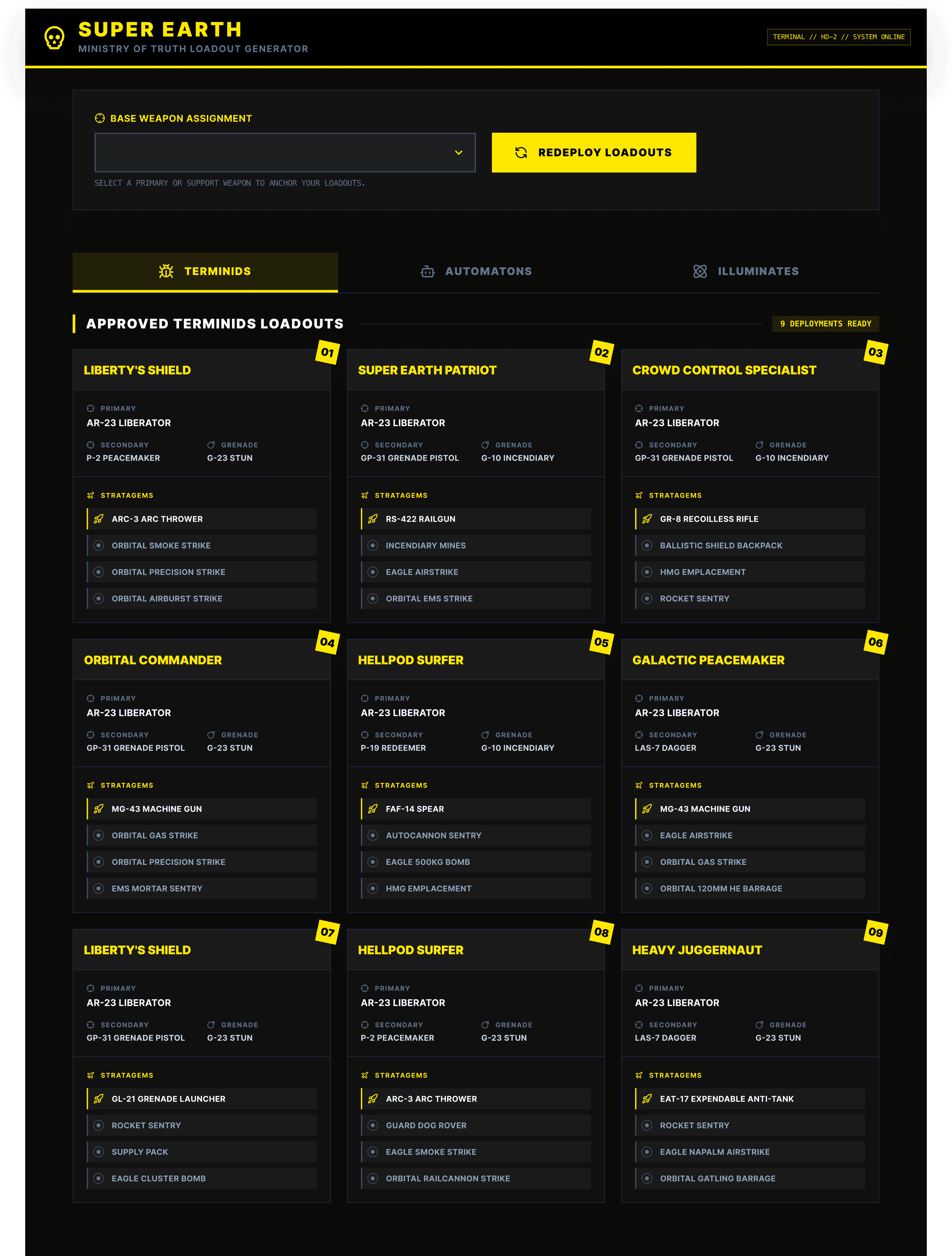
I designed a companion interface that lets players select their preferred weapon, generate balanced loadouts, visualize coverage, understand recommendations, and reroll new playstyles.
I designed a companion interface that lets players select their preferred weapon, generate balanced loadouts, visualize coverage, understand recommendations, and reroll new playstyles.
Ai-assisted design workflow
Used Figma Make to explore early interface concepts quickly, then refined manually in Figma focusing on hierarchy, readability, rapid scanning, and reducing decision friction.
Used Figma Make to explore early interface concepts quickly, then refined manually in Figma focusing on hierarchy, readability, rapid scanning, and reducing decision friction.
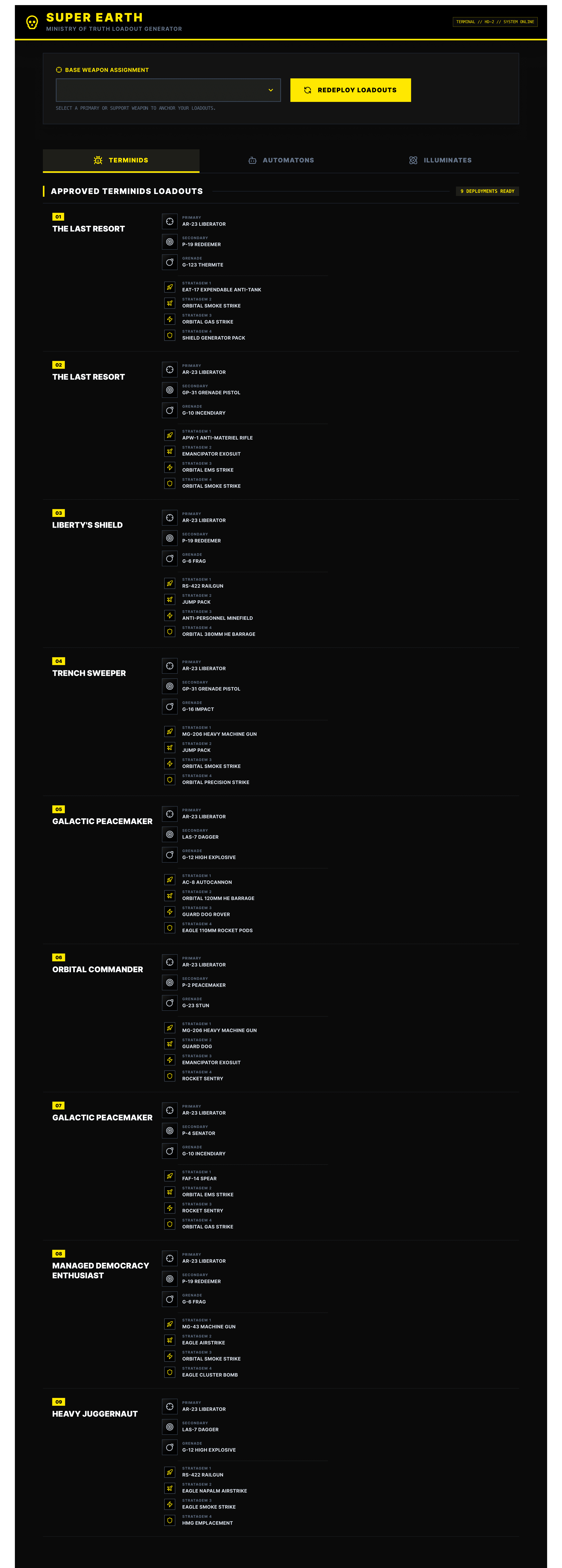
Here is an initial design that I used Figma Make to create a mockup to start from
I used figma to refine the Make output to be cleaner and easier to scan
Outcome: Reducing Friction & Encouraging Variety
Impact
Reduced pre-mission decision fatigue
Reduced pre-mission decision fatigue
Increased gameplay variety
Increased gameplay variety
Encouraged experimentation with underused equipment
Encouraged experimentation with underused equipment
Improved team preparedness across enemy types
Improved team preparedness across enemy types
Helped my group consistently perform at the game’s highest difficulty
Helped my group consistently perform at the game’s highest difficulty
User feedback - Tested with friends
“The biggest difference is that I no longer feel rushed into choosing random gear. The generated loadouts make me feel much more prepared going into difficult missions, and the variety keeps the game from feeling repetitive.”
“The biggest difference is that I no longer feel rushed into choosing random gear. The generated loadouts make me feel much more prepared going into difficult missions, and the variety keeps the game from feeling repetitive.”
Reflection - What I learned
This explored AI support for decision-making in large choice spaces, time pressure, behavioral bias, and changing constraints. It reinforced that effective AI experiences rely on structured systems, explicit constraints, transparency, and iterative refinement.
This explored AI support for decision-making in large choice spaces, time pressure, behavioral bias, and changing constraints. It reinforced that effective AI experiences rely on structured systems, explicit constraints, transparency, and iterative refinement.
© 2026 Saumeel Sondur. All rights reserved.